How is building soundproofing done?

Soundproofing a building is done in a number of different ways depending on the way the internal walls, floors and ceilings are constructed. For example, are they created mainly using timber, metal frames or masonry/concrete?
This matters because the goal is to add mass and create separation of connected building elements to reduce sound transmission paths through floor and wall structures, as well as preventing sound getting around these structures. Eliminating sound transmission entirely is rarely, if ever, possible, so soundproofing is better thought of as ‘sound reduction’ or an ‘acoustic treatment’.
The level of sound reduction that can be achieved will depend on a number of factors, including the maximum thickness possible for the wall or floor/ceiling construction, budget and whether there is a need to preserve any interior décor features.
The key to success is understanding how to combine the various acoustic insulation products in the correct way. It is here where Hush Acoustics has made it easier to select the right combination through a wide range of fully tested acoustic wall, floor and ceiling systems.
These systems are designed to suit many typical types of building construction and floor coverings, including timber floorboards, beam and block and concrete slab floors, as well as timber and metal stud walls and walls of a masonry build. Details of these systems, which are all compliant with the UK Building Regulations covering acoustic performance and suitable for Robust Details projects, are available on the Hush Acoustics website.
What do building soundproofing terms mean?
In order to help inform decisions about how to apply our acoustic wall and floor systems – or any type of sound insulation for that matter – it is important to understand the language of soundproofing. Here we provide a guide to what the most commonly used terms mean.
A-weighting
This is a series of adjustments applied to dB sound measurements to more closely reflect how noise is perceived by the human ear. It is needed because the sensitivity of the ear varies, which means it is most sensitive at frequencies of around 1-6 kHz. A-weighted figures are referred to as dB(A).
Absorption coefficient
This is used to measure and compare the performance of sound absorbers, providing a ratio of the sound energy incident on a surface, to the sound energy absorbed by that surface. Where there is an absorption coefficient of 1, all incident sound energy is absorbed.
Airborne sound
Sound that travels through the air, such as from speech, a television or radio.
Area weight
The area weight is the mass per unit area, measured in kilograms per square metre, which is often used in acoustics to specify materials such as plasterboard, sheathing board or acoustic membrane. It is calculated by multiplying a material’s density by its thickness, and materials with higher area weights will usually provide better sound insulation.
Ctr
This is an adjustment factor which accounts for low frequency noise, which is usually the biggest problem with sound insulation. It reduces the single figure weighted sound reduction level of a building element, according to its ability to block low frequency sound. Elements that are poorer at blocking low frequency sound will have a higher Ctr. The corrective term was originally developed to address the issue of rumbling traffic noise (hence the subscript ‘tr’), but today this term is often specified in situations where low frequency sound may cause annoyance.
Decibel, dB
This is perhaps the most commonly known acoustic value, which refers to the ‘loudness’ of a sound as defined by its intensity (see ‘Intensity’). Human ears can detect intensities from as low as 1x10-12 W/m2, up to a maximum tolerable level of around 1 W/m2. But because our brains interpret sound intensity logarithmically, it is better to relate intensity to the way in which we experience sound and manage this huge range. The following decibel scale is used:
dB = 10 log (I / I0)
- I is the measured intensity
- I0 is the intensity at the threshold of human hearing, 1x10-12 W/m2
Under the decibel scale, human ears can detect sound from 0 dB up to a tolerable 120 dB. Every increase of 10 dB equates to a doubling of the perceived volume.
Direct transmission
This relates to the path that sound takes directly through a separating element, as opposed to flanking transmission which goes around the element.
DnT,w
This is the weighted standardised level difference between two rooms, unlike Rw, which is a site measurement that includes flanking transmission.
Flanking transmission
This describes any path that sound is able to take between two rooms, other than directly through the separating element.
Floating floor
This is a construction where a continuous resilient layer isolates the finished floor surface from the structure of the building. The layer absorbs vibration to reduce the transfer of impact noise.
Frequency
The frequency of a sound wave is the number of oscillations per second, measured in Hertz (Hz). Frequency is more commonly thought of as ‘pitch’ treble (high frequency) and bass (low frequency).
IANL
This stands for ‘internal ambient noise level’, i.e. the loudness of background noise in a room.
Impact noise
This is the type of sound that is transferred through the structure of the building by physical contact. It is typically used to describe the noise from footsteps on a floor which transmits to a room below via the floor/ceiling construction, but it is also associated with the noise of rain falling on a roof.
Intensity
A term which describes the sound power per unit area, measured in Watts per square metre (W/m2).
L’nT,w
A measure that relates to impact sound. It is the weighted standardised impact sound pressure level represented as a single-number quantity to characterise the impact sound insulation of floors. To measure this, a ‘tapping’ noise machine is used to hit the floor while the noise level is taken in the room below .
LAeq
LAeq makes it easier to compare varying sound sources or acoustic environments. It does this by taking the total amount of sound energy measured over a defined period, and ‘averaging’ it out, as if the noise was at a constant level the entire time. This is needed because real-world sound sources tend to vary with time, such as a road being noisier at certain times of the day due to increased traffic flow. Hence the need for the ‘equivalent continuous sound pressure level’ or LAeq.
NR
NR, or ‘noise rating’, refers to a series of curves devised by ISO that define maximum permissible dB ratings in each frequency band.
Reverberation time
This is time taken, measured in seconds, for the sound in a room to decay by 60 dB. Where there is a high reverberation time, a high level of echo will occur.
Rw
This is an important measure as it enables us to easily compare construction elements. It is the weighted sound reduction index, in dB, which is measured in specialist laboratories where sound is only able to transfer from one room to another directly, with no flanking transmission.
Weighted
Given that sound varies by frequency, it can be difficult to compare the performance of different constructions to compare different spectra. Hence why the concept of weighting was devised, giving a single comparable figure with reference curve matched to the actual spectrum.
Find out more
Hush Acoustics provides specialist technical advice in all areas of building acoustics and soundproofing. The team works with architects, specifiers, contractors, developers and building owners to create acoustic designs that achieve the target performance, as well as supplying all the required materials and components. An installation service can be provided too.
For further information visit www.hushacoustics.co.uk or call 0114 551 8680.

Related Products


| Typical Use: | Domestic, Educa... |
| Diameter: | 20 |
| Uniclass: | Pr_30_31_76 Sea... |


| Typical Use: | To eliminate li... |
| Typical Building Sec...: | Commercial, Dom... |
| Material: | Rubber |


| Typical Use: | To seal edges |
| Typical Building Sec...: | Commercial, Dom... |


| Typical Use: | Used to maintai... |
| Uniclass: | Pr_30_31_76 Sea... |

| Thickness: | 19 |
| Finish(es): | MDF, Smooth |
| Uniclass: | Ss_30_20_10 Boa... |

| Typical Use: | Acoustic perfor... |
| Typical Building Sec...: | Commercial, Dom... |
| Overall Width: | 23 |
| Weight per Unit: | 20.88 |
| Application: | Concrete Struct... |
| Area: | 1.44 |
| Weight per m2: | 14.5 |

| Overall Width: | 28 |
| Weight per Unit: | 21.6 |
| Application: | Concrete, Exist... |
| Weight per Linear m.: | 15 |
| Uniclass: | Ss_30_20_10 Boa... |

| Thickness: | 18 |
| Finish(es): | Ceramic |
| Width: | 10 |
| Overall Depth: | 28 |

| Overall Width: | 600 |
| Weight per Unit: | 17.3 |
| Weight per Linear m.: | 24 |
| Overall Depth: | 28 |
| Overall Length: | 1200 |
| Uniclass: | Pr_25_71 Rigid ... |


| Thickness: | 33 |
| Typical Building Sec...: | Commercial, Dom... |
| Typical Building Typ...: | Offices |
| Density: | 26 |
| Typical Project Type: | Apartments, Con... |
| Thickness: | 48 |
| Typical Use: | Commercial, Hot... |
| Typical Building Sec...: | Housing |
| Typical Building Typ...: | Gymnasiums, Off... |
| Width: | 600 |
| Length: | 2400 |

| Overall Width: | 52 |
| Weight per Unit: | 32.4 |
| Weight per Linear m.: | 22.5 |
| Uniclass: | Ss_30_20_10 Boa... |

| Overall Width: | 25 |
| Application: | Directly over t... |
| Weight per m2: | 0.6 |
| Uniclass: | Ss_30_20_10 Boa... |

| Thickness: | 50 |
| Finish(es): | Custom Acoustic... |
| Material: | Fabric |

| Typical Use: | Ceilings, Comme... |
| Typical Building Typ...: | Commercial Offi... |
| Airborne Sound Insul...: | 45 |
| CE Marking: | 1 |
| Impact Sound Insulat...: | 56 |
| Typical Project Type: | Conversion, Ref... |

| Typical Building Sec...: | Commercial, Con... |
| Typical Building Typ...: | Administrative ... |
| Airborne Sound Insul...: | 47 |
| CE Marking: | 1 |
| Impact Sound Insulat...: | 56 |
| Typical Project Type: | Apartments, Con... |

| Typical Use: | Acoustic perfor... |
| Typical Building Sec...: | Commercial, Dom... |
| Application: | ceil, Ceilings,... |
| Typical Building Typ...: | Apartments, Car... |
| Airborne Sound Insul...: | 57 |
| CE Marking: | 1 |
| Impact Sound Insulat...: | 49 |

| Airborne Sound Insul...: | 60 |
| Typical Use: | Domestic, Inter... |
| Typical Building Sec...: | Domestic, Housi... |
| CE Marking: | 1 |
| Typical Project Type: | Apartments, Con... |


| Impact Resistance: | 53 |
| Weight: | 16 |
| Thickness: | 32 |
| Overall Width: | 600 |
| Overall Depth: | 32 |
| Overall Length: | 2400 |
| Uniclass: | Pr_25_71 Rigid ... |

| Typical Building Sec...: | Commercial, Dom... |
| Typical Building Typ...: | Offices |
| Typical Project Type: | Apartments, Con... |
| Uniclass: | Pr_25_57_06 Bat... |

| Typical Use: | Between separat... |
| Typical Building Sec...: | Commercial, Dom... |
| Material: | Granular minera... |
| Density: | 80 |


| Weight: | 1.93 |
| Typical Use: | Floors |
| Uniclass: | Pr_25_57_06 Bat... |

| Typical Use: | Acoustic separa... |
| Weight per Unit: | 2.7 |
| Overall Depth: | 75 |
| Uniclass: | Pr_25_57_06 Bat... |

| Weight: | 0.5 |
| Thickness: | 15 |
| Uniclass: | Pr_35_31_06 Bed... |

| Colour: | Black |
| Thickness: | 15 |
| Typical Use: | Commercial, Dom... |
| Material: | Recycled plasti... |
| Uniclass: | Ss_30_20_30_25 ... |
| Weight: | 92 |
| Colour: | Black |
| Typical Use: | Extensions, New... |
| Material: | Recycled Rubber... |
| Width: | 1250 |
| CE Marking: | 1 |
| Length: | 6000 |
| Uniclass: | Pr_25_93_72 Roo... |

| Features: | Excellent acous... |
| Uniclass: | Ss_30_40 Roof a... |

| Thickness: | 25 |
| Length: | 2400 |
| Uniclass: | Ss_30_25 Ceilin... |

| Weight: | 1 |
| Typical Building Sec...: | Commercial, Dom... |
| Typical Building Typ...: | Offices |
| Material: | Metal |
| Depth: | 16 |
| Typical Project Type: | Apartments, Con... |

| Weight: | 1.5 |
| Typical Building Sec...: | Commercial, Dom... |
| Typical Building Typ...: | Offices |
| Material: | Metal |
| Depth: | 30 |
| Typical Project Type: | Apartments, Con... |

| Typical Building Sec...: | Commercial, Dom... |
| Typical Building Typ...: | Offices |
| Typical Project Type: | Apartments, Con... |

| Average Weight: | 50 |
| Material: | Metal |
| Uniclass: | Ss_30_25 Ceilin... |
| Weight: | 19 |
| Features: | Multifunctional |
| Thickness: | 13 |
| Typical Use: | Acoustic perfor... |
| Uniclass: | Pr_25_71 Rigid ... |

| Weight: | 24 |
| Features: | Acoustic perfor... |
| Thickness: | 27 |
| Typical Use: | Acoustic perfor... |
| Uniclass: | Pr_25_71 Rigid ... |

| Weight: | 5 |
| Thickness: | 2 |
| Typical Building Sec...: | Domestic |
| Typical Building Typ...: | Offices |
| Typical Project Type: | Apartments, New... |
| Uniclass: | Pr_35_57 Non-ri... |

| Product Type: | Floor, Roll |
| Typical Use: | Flooring |
| Typical Building Sec...: | Commercial, Dom... |
| Uniclass: | Pr_35_57_11 Car... |

| Product Type: | Roll |
| Typical Use: | Flooring |
| Typical Building Sec...: | Commercial, Dom... |
| Width: | 2000 |
| Length: | 20000 |
| Uniclass: | Pr_35_57_11 Car... |

| Typical Use: | Flooring |
| Typical Building Sec...: | Commercial, Dom... |
| Width: | 1000 |
| Length: | 2000 |
| Uniclass: | Pr_35_57_11 Car... |

| Thickness: | 12 |
| Typical Building Sec...: | Domestic |
| Typical Building Typ...: | Offices |
| Material: | Rubber |
| Typical Project Type: | Apartments, New... |
| Uniclass: | Pr_35_57 Non-ri... |
| Compressive Strength: | 0.6 |
| CE Marking: | 1 |
| Uniclass: | Pr_35_31_06 Bed... |

| Features: | Environmentally... |
| Typical Use: | Concrete, Floor... |
| Typical Building Sec...: | Domestic |
| Typical Building Typ...: | Offices |
| Material: | Rubber |
| Typical Project Type: | Apartments, New... |
| Uniclass: | Pr_35_57 Non-ri... |

| Thickness: | 53 |
| Typical Use: | Conference room... |
| Typical Building Sec...: | Commercial, Dom... |
| Typical Building Typ...: | Conference cent... |
| Uniclass: | Pr_40_30_20_03 ... |

| Typical Use: | Conference room... |
| Typical Building Typ...: | Offices, School... |


| Typical Use: | Auditoriums, Ha... |
| Typical Building Typ...: | Offices, School... |

| Typical Use: | Acoustic perfor... |
| Typical Building Sec...: | Commercial, Dom... |
| Application: | Ceiling, Ceilin... |
| Typical Building Typ...: | Apartments, Car... |
| Material: | Timber |
| Airborne Sound Insul...: | 45 |
| Impact Sound Insulat...: | 56 |
| Typical Project Type: | Conversion, Ext... |

| Typical Use: | Ceilings, Domes... |
| Typical Building Sec...: | Commercial, Dom... |
| Typical Building Typ...: | Apartments, Hou... |
| Airborne Sound Insul...: | 49 |
| Impact Sound Insulat...: | 55 |

| Typical Use: | Ceilings, Comme... |
| Typical Building Sec...: | Commercial, Dom... |
| Application: | Ceilings, Float... |
| Typical Building Typ...: | Classrooms, Col... |
| Airborne Sound Insul...: | 53 |
| Impact Sound Insulat...: | 58 |
| Typical Project Type: | Apartments, Con... |

| Typical Use: | Acoustic perfor... |
| Typical Building Sec...: | Commercial, Dom... |
| Application: | Ceiling, Ceilin... |
| Typical Building Typ...: | Offices |
| Airborne Sound Insul...: | 49 |
| Impact Sound Insulat...: | 51 |
| Typical Project Type: | Apartments, Con... |

| Typical Building Sec...: | Commercial, Dom... |
| Typical Building Typ...: | Apartments, Hou... |
| Airborne Sound Insul...: | 48 |
| Impact Sound Insulat...: | 52 |
| Typical Project Type: | Conversion, Ref... |

| Typical Use: | Acoustic perfor... |
| Typical Building Sec...: | Commercial, Dom... |
| Airborne Sound Insul...: | 52 |
| Impact Sound Insulat...: | 51 |
| Typical Project Type: | Conversion, New... |

| Typical Use: | Acoustic perfor... |
| Typical Building Sec...: | Commercial, Dom... |
| Typical Building Typ...: | Apartments, Col... |
| Airborne Sound Insul...: | 52 |
| Impact Sound Insulat...: | 51 |
| Typical Project Type: | Conversion, New... |

| Typical Use: | Acoustic perfor... |
| Typical Building Sec...: | Commercial, Dom... |
| Application: | Floating Floors... |
| Typical Building Typ...: | Apartments, Hot... |
| Airborne Sound Insul...: | 46 |
| Impact Sound Insulat...: | 55 |
| Typical Project Type: | Apartments, Con... |

HD1017 Hush Acoustics System HF25 Advanced: Advanced acoustic insulation system for timber floors / ceilings
Hush Acoustics| Typical Building Sec...: | Commercial, Dom... |
| Typical Building Typ...: | Commercial Offi... |
| Airborne Sound Insul...: | 52 |
| Impact Sound Insulat...: | 50 |
| Typical Project Type: | Apartments, Con... |

| Typical Use: | Acoustic perfor... |
| Typical Building Sec...: | Commercial, Dom... |
| Application: | floor, Floors |
| Airborne Sound Insul...: | 51 |
| Impact Sound Insulat...: | 52 |
| Typical Project Type: | Apartments, Con... |

| Typical Use: | Acoustic perfor... |
| Typical Building Sec...: | Commercial, Dom... |
| Application: | Ceiling, Ceilin... |
| Typical Building Typ...: | Apartments, Bar... |
| Airborne Sound Insul...: | 58 |
| Impact Sound Insulat...: | 54 |
| Typical Project Type: | Apartments, Con... |

| Typical Use: | Domestic, Educa... |
| Typical Building Sec...: | Commercial, Dom... |
| Typical Building Typ...: | Apartments, Hou... |
| Airborne Sound Insul...: | 50 |
| Impact Sound Insulat...: | 51 |
| Typical Project Type: | Apartments, Con... |
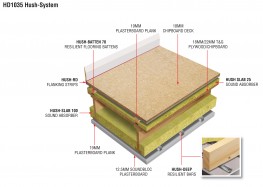
HD1035 Hush System TF Robust: Economical sound insulation system for new build timber frame projects
Hush Acoustics| Typical Use: | Acoustic perfor... |
| Typical Building Sec...: | Commercial, Dom... |
| Application: | Ceilings, Floor... |
| Typical Building Typ...: | Apartments, Fla... |
| Airborne Sound Insul...: | 59 |
| Impact Sound Insulat...: | 50 |
| Typical Project Type: | Apartments, Ext... |

HD1006 Hush System 1: High performance acoustic timber floor system for refurbishment projects
Hush Acoustics| Typical Use: | Acoustic perfor... |
| Typical Building Sec...: | Commercial, Dom... |
| Application: | floor, Flooring... |
| Airborne Sound Insul...: | 53 |
| Impact Sound Insulat...: | 48 |
| Typical Project Type: | Apartments, Con... |

HD1030 Hush System LP: Simple acoustic floating floor system for refurbishment of timber floors
Hush Acoustics| Typical Use: | Acoustic perfor... |
| Typical Building Sec...: | Commercial, Dom... |
| Application: | Ceilings, Float... |
| Typical Building Typ...: | Apartments, Com... |
| Airborne Sound Insul...: | 50 |
| Impact Sound Insulat...: | 54 |
| Typical Project Type: | Apartments, Con... |

| Typical Use: | Ceilings, Domes... |
| Typical Building Sec...: | Commercial, Dom... |
| Application: | Ceilings, floor... |
| Airborne Sound Insul...: | 52 |
| Impact Sound Insulat...: | 49 |
| Typical Project Type: | Apartments, Con... |

| Typical Building Sec...: | Commercial, Dom... |
| Application: | Ceilings, floor... |
| Typical Building Typ...: | Apartments, Cla... |
| Airborne Sound Insul...: | 50 |
| Impact Sound Insulat...: | 54 |
| Typical Project Type: | Conversion, New... |
| Typical Use: | Acoustic perfor... |
| Typical Building Sec...: | Commercial, Con... |
| Typical Building Typ...: | Apartments, Col... |
| Airborne Sound Insul...: | 53 |
| Impact Sound Insulat...: | 50 |
| Typical Project Type: | Conversion, Ref... |

| Typical Use: | Acoustic perfor... |
| Typical Building Sec...: | Commercial, Dom... |
| Application: | Ceiling, Ceilin... |
| Typical Building Typ...: | Apartments, Com... |
| Airborne Sound Insul...: | 48 |
| Impact Sound Insulat...: | 55 |
| Typical Project Type: | Apartments, Con... |

| Typical Building Sec...: | Commercial, Dom... |
| Typical Building Typ...: | Apartments, Her... |
| Airborne Sound Insul...: | 49 |
| Impact Sound Insulat...: | 47 |
| Typical Project Type: | Conversion, Ref... |

| Fire Resistance: | 60 |
| Typical Use: | Basements, Dome... |
| Typical Building Sec...: | Domestic, Housi... |
| Application: | Basements |
| Airborne Sound Insul...: | 48 |
| Impact Sound Insulat...: | 52 |
| Typical Project Type: | Conversion, Ref... |

| Typical Building Sec...: | Commercial, Dom... |
| Typical Building Typ...: | Apartments, Hou... |
| Airborne Sound Insul...: | 49 |
| Impact Sound Insulat...: | 62 |
| Typical Project Type: | Apartments, Con... |

| Typical Use: | Acoustic perfor... |
| Typical Building Sec...: | Commercial, Dom... |
| Application: | Ceilings, Concr... |
| Airborne Sound Insul...: | 48 |
| Density: | 400 |
| Impact Sound Insulat...: | 57 |
| Typical Project Type: | Apartments, Con... |

| Typical Use: | Acoustic perfor... |
| Typical Building Sec...: | Commercial, Dom... |
| Application: | Ceiling, Ceilin... |
| Typical Building Typ...: | Apartments, Bar... |
| Airborne Sound Insul...: | 48 |
| Impact Sound Insulat...: | 50 |
| Typical Project Type: | Apartments, Con... |
| Uniclass: | Pr_25_71 Rigid ... |
| Typical Use: | Acoustic perfor... |
| Typical Building Sec...: | Commercial, Dom... |
| Application: | Ceiling, Ceilin... |
| Airborne Sound Insul...: | 51 |
| Impact Sound Insulat...: | 50 |
| Typical Project Type: | Apartments, Con... |

| Typical Building Sec...: | Commercial, Dom... |
| Application: | Concrete, Float... |
| Typical Building Typ...: | Administrative ... |
| Airborne Sound Insul...: | 49 |
| Impact Sound Insulat...: | 48 |
| Typical Project Type: | Conversion, New... |

HD1047 Hush System Underscreed B/B: Underscreed Acoustic Membrane for Sound Insulation
Hush Acoustics| Typical Use: | acoustic insula... |
| Typical Building Sec...: | Commercial, Dom... |
| Application: | beam and block,... |
| Typical Building Typ...: | Apartments, Com... |
| Airborne Sound Insul...: | 49 |
| Impact Sound Insulat...: | 48 |
| Typical Project Type: | Apartments, Con... |

| Typical Use: | Acoustic perfor... |
| Typical Building Sec...: | Commercial, Dom... |
| Application: | Ceilings, Concr... |
| Typical Building Typ...: | Apartments, Com... |
| Airborne Sound Insul...: | 53 |
| Impact Sound Insulat...: | 48 |
| Typical Project Type: | Apartments, Con... |
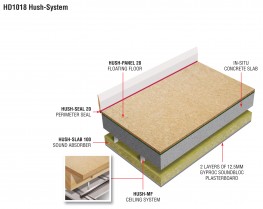
| Typical Use: | Acoustic perfor... |
| Typical Building Sec...: | Commercial, Dom... |
| Application: | Ceiling, Ceilin... |
| Airborne Sound Insul...: | 55 |
| Impact Sound Insulat...: | 45 |
| Typical Project Type: | Apartments, Con... |

HD1037 Hush Batten 55 System MF: Sound insulation system for concrete separating floors
Hush Acoustics| Typical Use: | Acoustic perfor... |
| Typical Building Sec...: | Commercial, Dom... |
| Application: | floor, Flooring... |
| Typical Building Typ...: | Apartments, Com... |
| Airborne Sound Insul...: | 49 |
| Impact Sound Insulat...: | 51 |
| Typical Project Type: | Apartments, Con... |

| Typical Use: | Commercial, Dom... |
| Typical Building Sec...: | Commercial, Dom... |
| Application: | Interior, Parti... |
| Airborne Sound Insul...: | 58 |
| Impact Sound Insulat...: | 58 |
| Typical Project Type: | Conversion, New... |

| Typical Use: | Commercial, Com... |
| Typical Building Sec...: | Commercial, Dom... |
| Application: | Partitions, Sep... |
| Typical Building Typ...: | Apartments, Bun... |
| Airborne Sound Insul...: | 48 |
| Typical Project Type: | Apartments, Con... |

| Typical Use: | Acoustic perfor... |
| Typical Building Sec...: | Commercial, Dom... |
| Application: | Acoustic dampen... |
| Airborne Sound Insul...: | 49 |
| Typical Project Type: | Conversion, New... |

| Typical Use: | Acoustic perfor... |
| Typical Building Sec...: | Commercial, Dom... |
| Application: | Partitions, Wal... |
| Airborne Sound Insul...: | 55 |
| Typical Project Type: | Conversion, New... |

| Typical Use: | Acoustic perfor... |
| Typical Building Sec...: | Commercial, Dom... |
| Application: | Interior, Walls |
| Typical Building Typ...: | Apartments, Dwe... |
| Airborne Sound Insul...: | 60 |
| Typical Project Type: | Conversion, New... |

| Typical Use: | Acoustic perfor... |
| Typical Building Sec...: | Commercial, Dom... |
| Typical Building Typ...: | Apartments, Car... |
| Airborne Sound Insul...: | 48 |
| Density: | 1900 |
| Typical Project Type: | Apartments, Con... |

| Typical Use: | Acoustic perfor... |
| Typical Building Sec...: | Commercial, Dom... |
| Application: | Partition Walls... |
| Typical Building Typ...: | Offices, School... |
| Airborne Sound Insul...: | 52 |
| Typical Project Type: | Apartments, Con... |
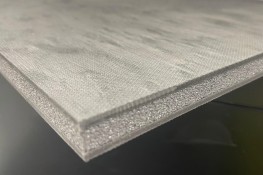
| Weight: | 21.6 |
| Mass: | 15 |
| Airborne Sound Insul...: | 61 |
| Thickness: | 15 |
| Typical Building Sec...: | Commercial, Dom... |
| Application: | Floor, Flooring... |
| Typical Building Typ...: | Apartments, Cal... |
| Width: | 1200 |
Contact

Contact
Contact