Vibration Isolation Principals
by PES (UK)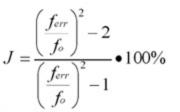
Reducing vibrations emanating from a machine, plant or other vibration-emitting equipment is vital for a disturbance-free operation of the machine or plant itself, as well as for its surroundings. Conversely, it is important to reduce external vibrations influencing the machine.
Therefore a distinction is made between ACTIVE isolation (which protects the surroundings from vibrations emitted by a machine, and PASSIVE isolation (in which the machine or plant itself is protected from external interference).
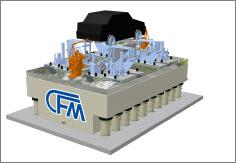
Mounting a machine on a vibration-isolated bedding reduces amplitudes, resulting from shock excitation, to a permissible operational level. Damping plays an important role in this as it transforms mechanical energy into heat and thus limits the amplitudes to a permissible level. It is important to select a suitable vibration isolator in order to achieve the best possible isolation effect.
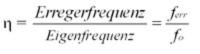
Firstly, it is necessary to consider the ratio between excitation and natural frequency:
Effective vibration isolation occurs when the above ratio exceeds the value >√2. If the value is smaller, it can result in excessive increase in interference. As a rule, the aim is to achieve a ratio between 3 and 4. For particular requirements, higher values may also be realized; however these have their limitations from both a technical and economic point of view. The isolation effectiveness is calculated as follows:
In general, four different types of isolators are employed at different and sometimes overlapping frequencies:
Specification Details for Vibration Isolation Principals
Please note that these product properties are not a replacement for the manufacturer's literature and it is always recommended that PES (UK) is consulted before specifying.
PES (UK) hasn't formatted technical specifications for Vibration Isolation Principals yet.
Please check out the similar products section for alternatives. Hint: products with have technical specifications.
File Downloads for Vibration Isolation Principals


Contact

Contact
Contact