Jointed sweet chestnut cladding
by Vastern Timber
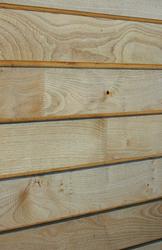
Sweet chestnut (not to be confused with horse chestnut) grows widely across Britain and the rest of Europe and offers an attractive alternative to oak. Despite its availability, British sweet chestnut historically has not been widely used domestically due to the English love of oak. However, a number of key projects including some supplied by Vastern Timber have persuaded architects and designers that British sweet chestnut is a functional, beautiful and environmentally sensitive choice.
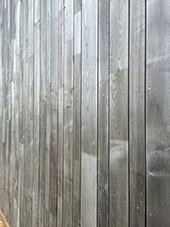
British sweet chestnut cladding is hard-wearing, strong and durable, and relatively light when compared to other hardwood cladding, making it ideal for exterior use. Additionally, sweet chestnut is known to be a very stable timber, resulting in less movement, distortion or splitting. It has a similar golden colour to oak, but with stronger grain and occasional dark brown mineral streaks and will weather to a natural silver colouring if left untreated.
The jointing process
Sweet chestnut cladding is produced as finger-jointed boards supplied in 4.0mt lengths which are created by mechanically bonding a number of shorter lengths together in a high pressure press using moisture resistant glue. This process is a big step forward in improving both the performance and the environmental credentials of our British sweet chestnut cladding. By utilising shorter lengths of sweet chestnut we can increase the yield, and therefore the value, of the forest resource and reduce the waste in our sawmills, all of which is good news. Furthermore, finger-jointed boards are longer, less prone to distortion and of a better and more consistent quality than standard boards.
Tannic Acid
One feature of sweet chestnut cladding that must be considered is the high tannin content. During the first few months after the cladding has been attached, tannin will exude from the boards, resulting in streaks and stains where it comes in to contact with masonry or render . Tannin also corrodes ferrous metal, so it is therefore important to use either Stainless Steel fixings. Additionally care should be taken to keep other ferrous metal such as scaffolding away from the cladding to avoid staining of the boards.
Specification Details for Jointed sweet chestnut cladding (Timber Cladding)
Please note that these product properties are not a replacement for the manufacturer's literature and it is always recommended that Vastern Timber is consulted before specifying.
 Materials & Finishes
 Other
Other
|
||
| Uniclass (?) | Pr_25_71_14 Cladding and lining panels | |
 Physical Properties
File Downloads for Jointed sweet chestnut cladding

Similar Timber Cladding Products

Contact

Contact
Contact