Getting a handle on doors – a guide for self-builders and home improvers
So how do you go about choosing a door?
When it comes to choosing a door there are so many options, single hinged, double hinged, stable, bi-fold, french doors, sliding patio doors. To get a handle on this (metaphorically), self-builders and homeowners should consider the basics first:
Start early – consider the doors at the design stage of your project, discuss with your architect or builder the options available and what would work well with the design of your home. Do plenty of research and use magazines, Pinterest or Instagram for inspiration. It’s also worth talking to some door specialists like George Barnsdale for guidance and advice.
Choose your style – traditional or contemporary?
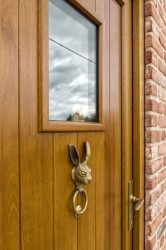
A farmhouse style building demands a traditional front door with minimal glass, often painted in pastel colours or natural stains and adorned with traditional hardware and a cute bumble bee or hare knocker.
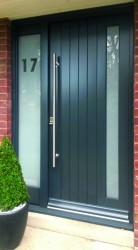
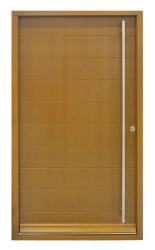
However, a modern, sleek design, usually larger than a traditional door with horizontal panels and sleek chrome handles is perfect for an architect designed contemporary building. A stained door like this brings warmth and a natural aesthetic to minimalist designs that might otherwise be too harsh.
Decide on your design
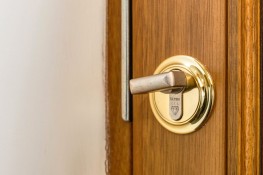
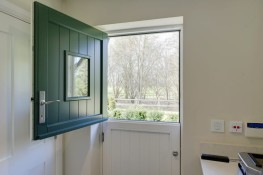
What type of door do you need? Aside from the front door, do you want bi-folds or sliding patio doors at the back? What size are you going for? What type of locking system? A contemporary door works well with keyless entry systems using an app on your phone whilst a traditional French door is better with a traditional lock. Stable doors can often have unsightly locking systems so shop around for products that are more discrete.
Pick a colour
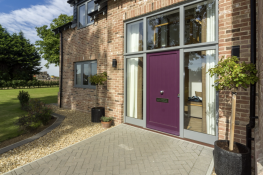
When it comes to colour, you could go for a really bold bright colour that makes a statement, most manufacturers can colour match to leading manufacturers’ paint colours.
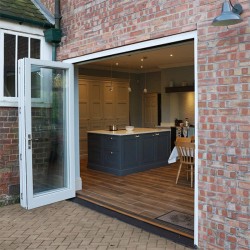
A set of anthracite grey bifold doors brings a smart industrial feel to a contemporary kitchen/breakfast room but it also works in a traditional setting.
If you prefer to see the grain of the timber, stains are a timeless option that will never go out of fashion.
What shape do you want?
What shape do you want? Arched top? Angled? Do you want any cut-outs, bespoke designs or etched glass. Consider the surroundings you are in – a porthole looks amazing on a contemporary door by the coast and an etched fan light is ideal in a traditional property.
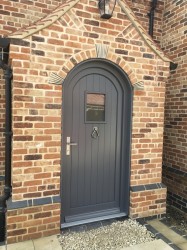
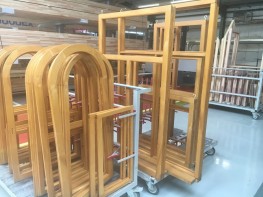
Arched door with some ornate brickwork is a great choice in a traditional or modern property
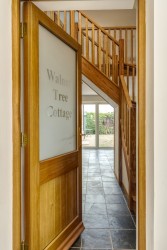
Etched glass adds a lovely personalised touch
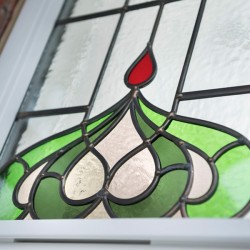
stained glass gives a beautiful traditional feel
Choose your material
Timber is the traditional material for doors, it is environmentally friendly, thermally the most efficient material, looks beautiful and the latest timber technology means it won’t warp and twist like it did in the past. Timber performs extremely well thermally and is more secure than many other materials and it can easily be repaired if there is any damage done unlike uPVC or composite. A modern, high performance door will last at least twice as long as UPVC and is obviously better for the environment. The modern paint systems that are used by quality manufacturers like George Barnsdale mean they won’t need touching for at least a decade or more too. We have lots of examples of windows that were installed up to 20 years ago and haven’t needed recoating. They can also be easily repainted and offer greater versatility than many other materials.
Composite doors combine traditional designs with added strength compared with uPVC alternatives. They are low maintenance and perform well but they are a much less sustainable option and are at the higher end of the price bracket.
Many architects recommend aluminium doors, especially for patio doors because of the slim profiles offered and the maximisation of glass but there are lots of examples where contemporary designs have been achieved in timber whilst being much kinder to the environment. This is usually a more expensive options but they are available in a wide range of colour options although they aren’t so easy to repaint if you fancy a change.
Check performance
New building regulations are currently being rolled out that demand even higher thermal performance – this might mean you need to consider triple glazing and the door will probably need to be thicker than you originally planned. There is a new “document O” to consider which covers overheating of buildings which will require good ventilation throughout the building and the control of solar gain so specialist glazing will need to be considered where large areas of glass are present.
Weather performance – sometimes contemporary doors without a weather board or floor level bi-fold doors can leak. Ensure your supplier has robust design and installation methods for such products. Juliet Balcony doors which are really a large window can also present problems with water ingress in exposed areas and if they haven’t been designed and installed correctly – ask your supplier for evidence of performance testing if you are considering these products.
In terms of security, choose a door with multipoint locking and make sure the frame is as robust as the door. This is often something that is overlooked and it’s important to remember the door is only as secure as the frame it is fitted into. Choose products that are tested to PAS24 and Secured by Design.
It is also possible to get keyless entry systems which are useful for people with mobility problems or if you want a really sleek contemporary design.
We are biased, but we really believe there is no better door than a timber door for looks, all round performance and longevity. There are doors all around the UK that have been around for hundreds of years and are still going strong.
All George Barnsdale’s products are made from FSC® certified timber in our Lincolnshire factory as they have been since 1884.

Related Products

Timber Entrance Doors - Make a statement with one of our stunning entrance doors!
George Barnsdale & Sons Ltd| U-value (overall): | 1.4, 1.6 |
| Bespoke: | 1 |
| Certifications: | FSC, PAS 24, Se... |
| Energy Efficiency Ra...: | B |
| Custom Colours Avail...: | 1 |
| Water Tightness: | 100 |
| British Standards: | BS 6375-2 |
| Standards: | ISO 14001, ISO ... |

| U-value (overall): | 0.8-1.4 |
| Bespoke: | 1 |
| Certifications: | FSC, PAS 24 |
| Energy Efficiency Ra...: | A++ |
| Glazing Type: | Laminated Glass |
| Typical Building Sec...: | Domestic |
| Air Tightness (Class...: | C |
| Optional Extras: | Triple Glazed |

Stable Doors - A charming addition to a farm house, but equally at home in a more contemporary setting
George Barnsdale & Sons Ltd| U-value (overall): | 1.6 |
| Bespoke: | 1 |
| Certifications: | FSC, PAS 24 |
| Energy Efficiency Ra...: | B |
| Custom Colours Avail...: | 1 |
| Typical Building Sec...: | Domestic |
| Air Tightness (Class...: | C |
| Water Tightness: | 98 |

Single Doors - Back Door - Understated, stylish and secure, a perfect addition to your home!
George Barnsdale & Sons Ltd| U-value (overall): | 1.4, 1.6 |
| Bespoke: | 1 |
| Certifications: | FSC, PAS 24, Se... |
| Energy Efficiency Ra...: | A++, B |
| Custom Colours Avail...: | 1 |
| Glazing Type: | Laminated Glass |
| Typical Building Sec...: | Domestic |
| Air Tightness (Class...: | C |

| U-value (overall): | 1.6 |
| Bespoke: | 1 |
| Certifications: | FSC, PAS 24 |
| Energy Efficiency Ra...: | B |
| Custom Colours Avail...: | 1 |
| Glazing Type: | Laminated Glass |
| Air Tightness (Class...: | C |
| Water Tightness: | 100 |

| U-value (overall): | 1.3 |
| Bespoke: | 1 |
| Certifications: | FSC, PAS 24 |
| Custom Colours Avail...: | 1 |
| Glazing Type: | Double Glazed, ... |
| Typical Building Sec...: | Domestic |
| British Standards: | BS 6375 |
| G-Value or Solar Fac...: | 71 |

| U-value (overall): | 1.3 |
| Bespoke: | 1 |
| Certifications: | FSC, PAS 24 |
| Energy Efficiency Ra...: | A++ |
| Custom Colours Avail...: | 1 |
| Glazing Type: | Double Glazed, ... |
| British Standards: | BS 6375 |
| Standards: | EN 942, ISO 140... |

| U-value (overall): | 1.3 |
| Bespoke: | 1 |
| Certifications: | Bluesky, FSC, P... |
| Energy Efficiency Ra...: | A++ |
| Custom Colours Avail...: | 1 |
| Glazing Type: | Double Glazed, ... |
| Typical Building Sec...: | Commercial, Dom... |
| Standards: | EN 14351-1 |
Contact

Contact
Contact