UK Cycle Parking Standards: A Practical Guide for Developers and Specifiers (2026)
The National Framework: Where the Rules Come From
Cycle parking requirements in the UK are not set by building regulations. They sit within the planning system, informed by a combination of national guidance, British Standards and locally adopted planning policy. There is no single national minimum – instead, requirements are set by local planning authorities through their Local Plans and Supplementary Planning Documents (SPDs), using national guidance as a baseline.
LTN 1/20 — Cycle Infrastructure Design (Department for Transport, 2020)
This is the primary technical guidance for cycle infrastructure in England and Northern Ireland, replacing the previous LTN 2/08. Chapter 11 covers cycle parking specifically, setting out minimum provision levels, design principles, spacing requirements and accessibility standards. While LTN 1/20 is non-statutory, Active Travel England — the government’s cycling and walking inspectorate — assesses major schemes against its standards and can withhold funding where provision falls short. Failing to follow it without a good reason also creates legal exposure. For any commercial or residential development in England, LTN 1/20 is the starting point.
BS 8596:2015 — Surveying, Designing and Installing Cycle Parking
The British Standard for cycle parking covers physical design in detail: stand spacing, minimum clearances, shelter dimensions, surface requirements and security classifications. It is widely referenced in planning conditions and by local authorities when assessing the quality of proposed cycle parking. Many planning applications will require provision to meet or exceed BS 8596 standards, particularly for covered and secured facilities.
The National Planning Policy Framework (NPPF) 2024
The updated NPPF, revised in December 2024, requires local planning authorities to set cycle parking standards that reflect local circumstances and support sustainable travel. Paragraph 112 specifically addresses parking standards, confirming that authorities should set minimums for cycle parking as part of their development plan policies. Applications that fail to meet adopted local standards are unlikely to receive consent.
England: How It Works in Practice
While national guidance sets the framework, cycle parking requirements in England are determined at the local level through each authority's parking standards SPD. These vary significantly.
London — London Plan Policy T5
The London Plan (adopted 2021, with the Mayor's Transport Strategy providing supporting guidance) sets out specific cycle parking standards for all major development types. Policy T5 requires residential developments to provide a minimum of one long-stay space per studio or one-bedroom unit and two spaces per unit with two or more bedrooms. For commercial development, the standards are set by use class - an office of 1,500 sqm or more in a central London location typically requires one cycle space per 75 sqm, for example. The Healthy Streets approach embedded in the London Plan also requires cycle parking to be covered, well-lit, accessible and secure. For larger developments, Transport for London's Transport Assessment process will scrutinise cycle parking provision in detail.
The West Midlands — Birmingham and Beyond
Birmingham City Council's parking standards require cycle parking across all development types. For office and commercial development, the council applies minimum standards derived from LTN 1/20 as a baseline, with the expectation that provision is covered and secure for longer-stay users. The Greater Birmingham and Solihull Local Enterprise Partnership area has seen increasing scrutiny of sustainable transport provision as part of planning consent, particularly for larger employment sites. For specifiers working in the region, Birmingham's Car Parking Guidelines SPD remains the primary reference, though it is being updated to reflect the 2024 NPPF requirements and local net zero commitments.
Greater Manchester
Transport for Greater Manchester has published active travel guidance aligned with LTN 1/20. Manchester City Council and the surrounding ten boroughs each maintain their own parking standards SPDs, but there is a consistent expectation across the conurbation that major residential and commercial development provides covered, secure cycle parking. The Bee Network — Greater Manchester's integrated transport programme — has increased the profile of cycling infrastructure significantly, and planning officers across the region are increasingly robust in applying cycle parking conditions.
Scotland: NPF4 and the Active Travel Imperative
Scotland operates its own planning system, and cycle parking requirements are governed through a different legislative framework entirely. The National Planning Framework 4 (NPF4), adopted by Scottish Ministers in February 2023, places active travel at the heart of development policy for the first time.
NPF4 Policy 13 (Sustainable Transport) requires all new development to be designed to support walking, cycling and public transport as the primary modes of movement. For significant development, transport appraisals must demonstrate how the proposal supports active travel, and cycle parking provision is a core element of this. Active travel connections are now a first consideration for connecting new developments under NPF4, no longer an optional extra.
In practical terms, Scottish local authorities apply their own cycle parking standards through Local Development Plans. Edinburgh City Council, for example, requires secure, covered cycle parking for all new residential development — typically one space per flat as a minimum — and sets commercial requirements by use class. Glasgow City Council similarly requires developers to demonstrate compliance with active travel design standards as part of the pre-application process. For specifiers working in Scotland, the relevant Local Development Plan and its accompanying transport guidance are the definitive reference, read alongside NPF4.
Wales: Active Travel Act and TAN 18
Wales has its own statutory framework for active travel under the Active Travel (Wales) Act 2013 — the first legislation of its kind in the world. Local authorities are required to produce Active Travel Network Maps and to ensure new development connects to them. Welsh planning policy, including Technical Advice Note (TAN) 18 on Transport, requires developers to assess the impact of proposals on walking and cycling and to provide appropriate cycle parking.
What Good Cycle Parking Provision Actually Looks Like
Location
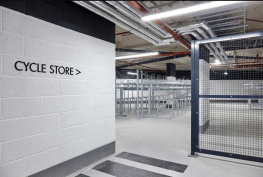
Cycle parking should be positioned as close to the building entrance as reasonably possible — ideally closer than car parking. Poorly located cycle parking that requires cyclists to carry bikes up stairs or through narrow corridors will not be considered acceptable by most planning authorities.
Security
Long-stay provision (for residents and employees) should be fully enclosed, lockable and ideally within a secure room or enclosure. Short-stay provision (for visitors) should use stands that allow the frame and both wheels to be locked. Sheffield-type stands or equivalent remain the preferred format for short-stay, while two-tier racks and individual lockers address higher-security long-stay demand.
Weather protection
LTN 1/20 is explicit that long-stay cycle parking should be covered. Exposed racks without shelter are unlikely to meet the standards required by most local authorities for residential or commercial development.
Dimensions
BS 8596 sets minimum stand spacing at 1,000mm centre to centre for Sheffield-type stands, with a 1,200mm minimum aisle width. Two-tier rack systems have specific dimension requirements depending on the system type. These are not advisory — planning conditions frequently require compliance with BS 8596 dimensions to be demonstrated at detailed design stage.
Accessibility
LTN 1/20 requires accessible cycle parking design that accommodates adapted cycles, cargo bikes and larger e-bikes. At least some spaces should be sized and positioned to be usable by non-standard cycles. This is increasingly enforced through planning conditions.
E-Bikes and Cargo Bikes: The Emerging Requirements
Two relatively recent additions to the standards landscape are worth particular attention.
E-bike charging provision is beginning to appear in planning conditions, particularly for residential development and transport hubs. While there is no current national minimum standard for e-bike charging in cycle stores, the direction of travel is clear. Several London boroughs and Scottish authorities are already requiring it for larger developments, and it is expected to be incorporated into future updates to LTN 1/20 guidance. Specifiers designing cycle stores now should future-proof provision by installing appropriate ducting or electrical infrastructure.
Cargo bike provision is also becoming a more prominent requirement. LTN 1/20 notes the need to accommodate a range of cycle types, and planning authorities are increasingly expecting at least some spaces to be sized for cargo bikes — which are considerably larger than standard bicycles. The Cambridge Cycle Parking Guide for New Residential Developments, widely referenced by authorities as a best practice model, gives specific guidance on cargo bike space dimensions.
BREEAM and Cycle Parking
For commercial development seeking BREEAM certification, cycle parking sits within the Transport category under credit TRA 03. Credits are available for providing compliant cycle parking spaces for building occupants and visitors, along with associated end-of-trip facilities including showers, changing rooms and clothing lockers. The number of credits available depends on the level of provision relative to occupancy. For many commercial developments targeting BREEAM Excellent or Outstanding, TRA 03 is a meaningful contribution to the overall score, and the cycle storage specification should be determined with BREEAM credits in mind at the early design stage.
Working with Your Local Planning Authority
Given the variation in requirements across the UK, the most reliable approach is to engage with the local planning authority early. Many councils offer pre-application advice services — using them to confirm cycle parking requirements before finalising a scheme avoids abortive design work and delays at the application stage.
When assessing any site, the relevant documents to review are the Local Plan policies on sustainable transport, the parking standards SPD if one exists, and any site-specific conditions or planning brief. In London, TfL's Healthy Streets design guidance and the London Plan Parking Note are additional references. In Scotland, the relevant Local Development Plan and NPF4 Policy 13 apply.
The key standards to reference across all submissions are LTN 1/20 Chapter 11 for design and provision levels, BS 8596:2015 for physical dimensions and security, and the local SPD for authority-specific minimums.
How We Can Help
The Bike Storage Company works with architects, developers and planning consultants at the specification stage to ensure cycle parking provision meets the requirements of the relevant local authority. We provide compliant layouts, CAD files and product specifications for planning submissions, and our team can advise on BREEAM TRA 03 requirements for commercial projects.
All our products are British-made and designed to meet or exceed LTN 1/20 and BS 8596 standards. From short-stay Sheffield stands to fully enclosed two-tier shelters and individual bike lockers with e-bike charging, we offer the full range of compliant solutions for any development type.

Related Products
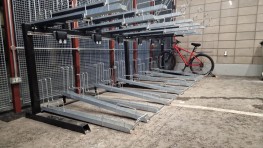
| Height: | 2500 |
| Depth: | 1800 |
| Finish(es): | Galvanised, Gal... |
| Material: | Steel |
| Typical Building Sec...: | Domestic, Educa... |
| Country of Origin: | UK |
| Bespoke: | 1 |
| Product Type: | Rack |

| Height: | 1200 |
| Depth: | 399 |
| Finish(es): | Galvanised, Pow... |
| Material: | Steel |
| Above Ground Height: | 1200 |
| Certifications: | BREEAM, ISO 140... |
| Colour: | Black, Blue, Gr... |
| Weight: | 33 |
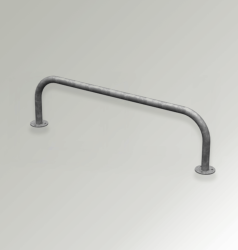
| BREEAM Description: | Supports sustai... |
| Height: | 800 |
| Depth: | 1000-1500 |
| Finish(es): | Galvanised stee... |
| Material: | Galvanised Stee... |
| Typical Building Sec...: | Commercial, Dom... |
| Above Ground Height: | 800 |
| Country of Origin: | United Kingdom |
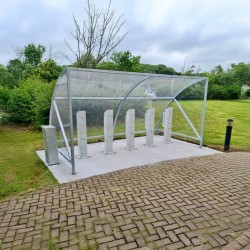
| BREEAM Description: | Supports sustai... |
| Height: | 2500 |
| Depth: | 2000 |
| Finish(es): | Galvanised stee... |
| Material: | Galvanised Stee... |
| Typical Building Sec...: | Commercial, Dom... |
| Above Ground Height: | 2500 |
| Country of Origin: | United Kingdom |
File Downloads
Contact

Contact
Contact