How to Design an Effective End-of-Trip Facility
A Practical Guide for Architects and Developers
Get it wrong, and it often goes underused – or worse, requires a costly redesign.
At The Bike Storage Company, we work with architects and developers to design modern workplace cycle facilities that function seamlessly from day one. Projects such as Bow Bells House, London prove how a coordinated, design-led approach delivers a high-performing EOT facility within even the most constrained environments.
What Is an End-of-Trip Facility?
An end-of-trip facility refers to the collection of spaces and amenities that support cyclists once they arrive at a building.
While often mistaken for simple changing rooms, a true EOT facility is far broader. It is a holistic, interconnected space that supports the full journey from arrival to desk.
As active travel policies, planning requirements and BREEAM targets continue to shape workplace design, end-of-trip facilities must be approached as fully integrated environments.
What Does a Complete End-of-Trip Facility Include?
A well-designed end-of-trip facility brings together multiple elements, each playing a critical role in usability and purpose.
As a benchmark, this should include:
- Secure cycle storage – the anchor of all workplace cycle facilities
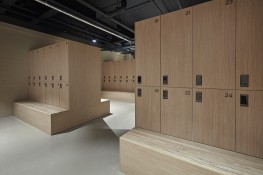
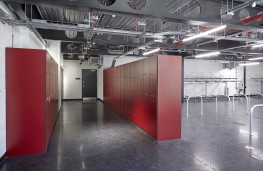
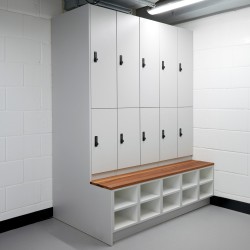
- Commercial clothing lockers
- Changing rooms and showers
- Drying rooms and airing spaces
- Steaming and water stations
- Cycle maintenance provision
- Wayfinding, lighting and CCTV
At Bow Bells House, in the heart of London, we delivered this full scope within a basement environment – combining high-density cycle storage with premium lockers, steaming stations and supporting amenities in a single coordinated space. An easy way to encourage sustainable commuting and increase workplace satisfaction.
Planning & Regulatory Considerations
Understanding when and how an EOT facility is required is fundamental.
Key considerations include:
- Planning conditions tied to commercial developments
- Local Transport Note 1/20, which sets expectations for cycle infrastructure
- BREEAM end of trip credits, where assessors review provision, usability, and quality
- The London Plan, which places greater emphasis on cycle parking and associated facilities compared to many UK regions
Designing for the User Journey
The most important part? Put the user first. From arrival to their desk, every step of the user journey must be intuitive:
Arrival → Cycle storage → Changing → Locker → Workplace
Key design considerations include:
- Proximity: cycle storage should be close to both building access and changing rooms
- Flow: avoid cross-traffic and congestion in peak periods
- Capacity planning: design for future demand, not just day-one occupancy
- E-bike provision: allow for charging, heavier frames and increased space requirements
- Inclusive design: accessible cycle spaces and facilities must be integrated from the outset
- Maintenance provision: for example, our self-service Public Bike Maintenance Stand, increasing long-term usability and ensuring cyclist safety.
Early collaboration with us is key to ensuring the facility is planned as part of the scheme, not as an afterthought. This leaves less room for risks or errors later down the line.
The most common issues we see include:
- Cycle storage located too far from entrances or changing areas
- Under-provisioned lockers and showers relative to cycle capacity
- Late-stage clashes with ducts, pipework and structural elements
- Treating the end-of-trip facility as a back-of-house utility space
Choosing the Right Cycle Storage for an EOT Facility
Cycle storage is the foundation of any end-of-trip facility, and selecting the right system is critical.
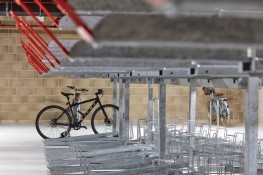
Two-Tier Bike Racks
For high-density environments, two-tier racks offer the most space-efficient solution – as seen at Bow Bells House, London, where 150 cycle spaces were delivered within a constrained footprint.
Cycle Lockers
In certain applications, lockers provide maximum security and individual ownership, particularly relevant for e-bike users or long-stay parking.
Design Coordination
One of the most overlooked aspects of workplace cycle facilities is visual and material consistency.
In our premium end-of-trip facilities, the cycle storage, commercial clothing lockers, male and female changing room and complementary products are specified with a coordinated finish.
A Single-Supplier Approach
Working with a single supplier across the full EOT scope ensures:
- Better coordination across the spaces
- Consistent specification
- Clear accountability
For a deeper dive, see: The Complete Guide to Specifying Cycle Storage in the UK.
NPF4 Policy 13 (Sustainable Transport) requires all new development to be designed to support walking, cycling and public transport as the primary modes of movement. For significant development, transport appraisals must demonstrate how the proposal supports active travel, and cycle parking provision is a core element of this. Active travel connections are now a first consideration for connecting new developments under NPF4, no longer an optional extra.
In practical terms, Scottish local authorities apply their own cycle parking standards through Local Development Plans. Edinburgh City Council, for example, requires secure, covered cycle parking for all new residential development — typically one space per flat as a minimum — and sets commercial requirements by use class. Glasgow City Council similarly requires developers to demonstrate compliance with active travel design standards as part of the pre-application process. For specifiers working in Scotland, the relevant Local Development Plan and its accompanying transport guidance are the definitive reference, read alongside NPF4.
Our Role in End-of-Trip Facility Design
Designing a high-performing end-of-trip facility requires more than product selection – it requires coordination.
At The Bike Storage Company, we support the full lifecycle of workplace cycle facilities, including:
- Two-tier racks, lockers, and full end-of-trip product range
- Layout planning aligned with architectural drawings
- CAD support and BREEAM end-of-trip documentation
- Professional installation and project delivery

Related Products

| Material: | Steel |
| Height: | 2500 |
| Finish(es): | Galvanised, Gal... |
| Depth: | 1800 |
| Certifications: | Breeam |
| Bespoke: | 1 |
| Country of Origin: | UK |
| Product Type: | Rack |
| Material: | Mild Steel |
| Height: | 2500 |
| Depth: | 1900 |
| Certifications: | BREEAM, ISO 140... |
| Bespoke: | 1 |
| Country of Origin: | UK |
| Warranty: | 10 |
| Typical Building Typ...: | Offices, School... |
| Material: | Hardwood, Mfc, ... |
| Height: | 973 |
| Finish(es): | Aluminium, Lami... |
| Depth: | 576 |
| RAL Colours Availabl...: | 1 |
| Lock Type: | Key Cam Lock, K... |
| Width: | 264 |
| Features: | Compact, Qualit... |
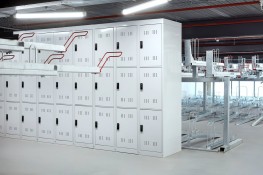
| Material: | Aluminium, Mfc,... |
| Height: | 20000 |
| Finish(es): | High Pressure L... |
| Depth: | 500 |
| RAL Colours Availabl...: | 1 |
| Lock Type: | Key Cam Lock, K... |
| Width: | 300 |
| Fitting Options: | Aluminium Powde... |
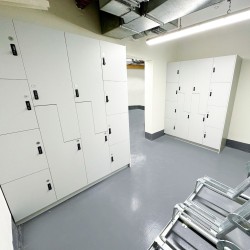
| Material: | Aluminium, MFC,... |
| Height: | 2000 |
| Finish(es): | High Pressure L... |
| Depth: | 700 |
| RAL Colours Availabl...: | 1 |
| Lock Type: | Key Cam Lock, K... |
| Width: | 500 |
| Fitting Options: | Aluminium Powde... |
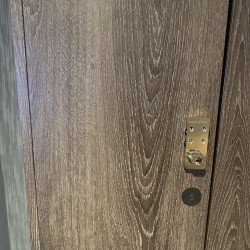
| Material: | Aluminium |
| Height: | 2000 |
| Finish(es): | Aluminium, Lami... |
| Depth: | 500 |
| RAL Colours Availabl...: | 1 |
| Lock Type: | Key Cam Lock, K... |
| Width: | 300 |
| Fitting Options: | Ground, Surface... |
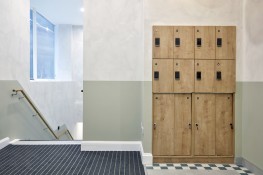
| Material: | Aluminium, MDF,... |
| Height: | 2000 |
| Finish(es): | Laminated, PVC ... |
| Depth: | 600 |
| RAL Colours Availabl...: | 1 |
| Lock Type: | Key Cam Lock, K... |
| Width: | 600 |
| Fitting Options: | Floor Mounted |

| BREEAM Description: | Supports sustai... |
| Frame Type: | Enclosed locker... |
| Material: | Steel |
| Finish(es): | Powder coated s... |
| RAL Colours Availabl...: | 1 |
| Lock Type: | Lockable door |
| Fitting Options: | Surface mounted |
| Features: | British-made, d... |
File Downloads
Contact

Contact
Contact