Understanding Circular Economy in Construction: How Reclaimed Materials Build a Sustainable Future
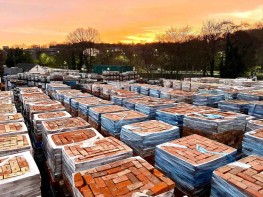
Across the UK, the way we design and build is changing fast. Architects, developers and homeowners are moving away from the traditional “take–make–discard” model that has defined construction for decades. In its place, a new approach is taking root — one that values reuse, durability and smarter resource management. It’s called the circular economy, and it’s reshaping how we think about the built environment.
At Reclaimed Brick Company, circular thinking isn’t a future aspiration — it’s how we’ve always worked. Every reclaimed brick we clean, sort and supply represents a tangible step toward reducing waste and lowering embodied carbon. Together with our sister company Britannia Stone, we’re proving that reclaimed materials aren’t just part of the sustainability conversation — they’re leading it.
What the Circular Economy Really Means
In simple terms, the circular economy keeps materials in use for as long as possible. Instead of manufacturing new resources, it focuses on how existing ones can be repaired, reused or repurposed.
According to the UK Green Building Council (2024), circular construction is essential for achieving net-zero carbon goals because it reduces demand for energy-intensive manufacturing and minimises waste. The opposite is the linear model — extract, build, use, demolish, landfill — which consumes finite resources and generates unnecessary emissions.
That’s where reclaimed materials such as bricks, Yorkstone paving and building stone naturally fit in: they’re already made, already proven and ready to use again.
Plain English: What This Means on Site
For builders and homeowners, the circular economy simply means reusing what still works. If a material can do its job again, it should. Using reclaimed bricks or stone saves new raw materials from being mined or fired, keeps waste out of landfill and often lowers costs. Every time a project chooses reclaimed over new, it reduces demand on the planet — without compromising quality or character.
Why Circularity Matters for ESG and Policy
Circular construction isn’t just good practice — it’s becoming policy. The UK Government’s Net Zero 2050 Strategy, the Construction Leadership Council’s Routemap to Zero Carbon, and RIBA’s Sustainable Outcomes Guide all emphasise reuse and low-carbon design as key to sustainable development.
For architects and developers, reclaimed materials help meet these goals directly by supporting:
- Environmental – major reductions in embodied carbon and waste.
- Social – protection of local heritage and community identity.
- Governance – traceable, ethical supply chains with verifiable provenance.
The Waste and Resources Action Programme (WRAP) estimates that reclaimed materials can reduce embodied carbon by 75–95 % compared with new manufacture — a powerful saving for projects aiming for BREEAM or LEED certification.
Circular Construction in Practice: Marks & Spencer Eco Store, Sheffield
When Marks & Spencer decided to build their Sheffield Eco Store, the design team prioritised reclaimed materials to reduce embodied carbon and reflect the area’s architectural heritage. Reclaimed bricks supplied from our Sheffield yard helped the project meet its sustainability objectives, combining authentic aesthetics with measurable carbon savings.
Beyond Bricks: Applying Circular Thinking to Stone
Circular construction doesn’t stop at bricks. Our partner brand Britannia Stone applies the same principles to reclaimed paving, building stone and walling stone. Each piece is recovered, cleaned and re-graded for reuse — ensuring that centuries-old materials continue to serve modern projects.
Whether it’s heritage walling in the Cotswolds or reclaimed setts for city regeneration, these materials form part of the same closed-loop philosophy: build once, reuse forever.
How Reclaimed Materials Support BREEAM & LEED
Projects working toward BREEAM or LEED can earn credits directly through reclaimed sourcing:
- MAT 01 – Life-Cycle Impacts: Reusing existing materials avoids new production energy.
- WST 01 – Construction Waste Management: Salvaging and reuse reduce landfill waste.
- MAN 02 – Responsible Procurement: Provenance documentation supports transparent sourcing.
- LEED v4 – Building Life-Cycle Impact Reduction: Recognises embodied-carbon savings through reuse.
Because reclaimed bricks and stone bypass manufacturing, they contribute directly to measurable carbon reductions.
Measuring Embodied Carbon: The Big Lever
According to RIBA (2023), embodied carbon can account for up to 75 % of a building’s lifetime emissions. By reusing existing materials, we eliminate that initial carbon debt — the emissions from manufacturing occurred decades ago. A reclaimed brick’s reuse today comes at virtually no additional environmental cost.
Three Practical Steps to Build Circularly
1️⃣ Audit what already exists.
Before specifying new materials, assess what can be reclaimed or reused — both on-site and via local suppliers.
2️⃣ Specify reclaimed early.
Include reclaimed materials at the design stage for easier scheduling, documentation and BREEAM evidence.
3️⃣ Document and deliver responsibly.
Keep supplier provenance and sustainability statements on file for ESG and certification records.
Building a Circular Future
Circular construction isn’t a passing trend — it’s the foundation of a sustainable built environment. By reusing what already exists, we reduce carbon, protect heritage and build resilience into our supply chains.
At Reclaimed Brick Company, every brick we reclaim and every pallet we dispatch helps keep valuable materials in circulation. Together with Britannia Stone, we’re proud to play our part in shaping a future where building sustainably means building intelligently.
Originally published by Reclaimed Brick Company – Sheffield
Read the full article here: Understanding the Circular Economy in Construction: How Reclaimed Materials Build a Sustainable Future

Contact

Contact
Contact