MultiTrack Nonwoven Geotextiles
by Geoworks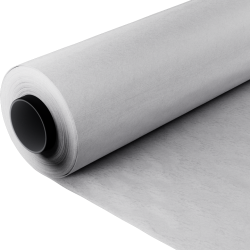
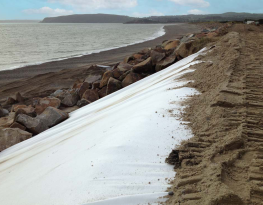
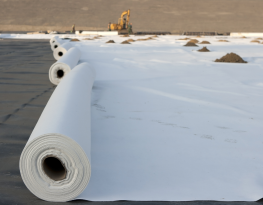
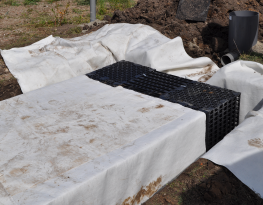
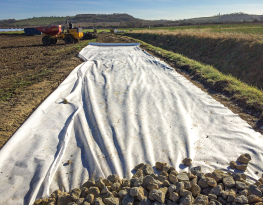
MultiTrack Nonwoven (NW) geotextiles are designed to provide reliable separation and filtration in a wide range of civil engineering and construction projects. Manufactured from high-quality polypropylene fibres, they create a stable interface between different soil layers, preventing unwanted mixing while allowing water to pass through. This dual function is critical to maintaining the long-term performance of road, rail, and drainage structures.
MultiTrack Nonwoven performs effectively in soils with fines content greater than 15%, where water movement must be managed alongside soil retention. Their hydraulic properties allow consistent filtration, while robust mechanical performance withstands the demands of normal construction traffic and compaction. This makes them suitable for applications such as highway pavements, rail embankments, car parks, and Sustainable Drainage Systems (SuDS).
By specifying MultiTrack, designers can reduce the risk of aggregate loss, soft spots, and subsequent maintenance issues. The use of a dependable separator geotextile often minimises the thickness of imported granular layers, supporting both cost efficiency and carbon reduction targets in line with modern infrastructure programmes.
MultiTrack is supplied in a range of grades to suit varying site conditions, with options covering light-duty landscaping through to heavily trafficked road construction. All grades are UKCA and CE marked and backed by extensive technical data, giving specifiers confidence that the product meets stringent industry standards.
For projects where reliable soil reinforcement, drainage support, and long-term durability are essential, MultiTrack nonwoven geotextiles offer a practical and proven solution. Geoworks provides full technical support, including design guidance and CPDs, to ensure that specifications are both accurate and value-driven from the outset.
Specification Details for MultiTrack Nonwoven Geotextiles (Geotextiles)
Please note that these product properties are not a replacement for the manufacturer's literature and it is always recommended that Geoworks is consulted before specifying.
 Technical
|
||
| Elongation at Maximum Load - Longitudinal (?) | 45 % | |
| Elongation at Maximum Load - Transverse (?) | 55 % | |
| Features (?) | Allows passage of fluids whilst retaining soil particles , Prevents intermixing of dissimilar soil layers | |
| Opening Size (?) | 140 µm | |
| Puncture Resistance (?) | 1000 N | |
| Tensile Strength (?) | 6 KN/m | 14.29% |
| Tensile Strength (Across Roll) (?) | 6 kN/m | 7.69% |
| Water Permeability (?) | 120 mm/s | |
 Certifications & Ratings
 Commercial
|
||
| Application (?) | Artificial Grass , Car parks , Driveways , French drains , Gravel paving , Green Roof , Groundworks , Hardstandings , Industrial units , Parking areas , Patios , Roads , Shed bases , Soakaways , SuDs | |
| Product ID Number (?) | MultiTrack 700 | |
| Range Name (?) | MultiTrack | |
| Typical Use (?) | Filtration , Separation | |
 Size & Weight
 Other
Other
|
||
| Uniclass (?) | Pr_15_57_35 Geotextiles | |
File Downloads for MultiTrack Nonwoven Geotextiles
A geotextile is a man-made synthetic textile that can be used in a wide variety of Civil Engineering applications. In order to be classed as a geotextile it must be permeable and it must separate the soil layers either side of it.
Fundamentally the use of a geotextile will save money. By correctly selecting a quality product, manufactured in controlled traceable conditions, this will be achieved by a product which delivers consistent performance, that can be rapidly installed with a reduction in the use of raw materials. Furthermore, inclusion of a geotextile will be cost effective against soil or other construction materials with a carbon footprint that is much lower than traditional solutions.
Geotextiles fall into two broad groups being either woven or non woven. Within these 2 groups there are also more subtle variances such as whether a non woven geotextile is thermally or mechanically bonded (or varying combinations of both). The method of manufacture will affect the properties of the finished product and how it performs.
For example, in the majority of cases a basic woven (such as FasTrack 609) or non woven (MultiTrack NW8) is suitable to use as a separator. However, woven geotextiles are generally better at providing additional reinforcement to the soil where as non woven geotextiles provide greater permeability and superior filtration.
Depending on the type and grade of product used a geotextile can perform the functions of separation, filtration, reinforcement, and protection. To a lesser extent a geotextile can also provide erosion protection or drainage (where fluid/ gas travels in the plane of the product rather than directly through it although this is often better provided by other geosynthetics).
Geoworks offer extensive ranges of both woven and non woven geotextiles so, unlike many suppliers, can offer the best product for a particular application rather than the ‘next best’ based on what they have to offer. Our woven geotextile range is called FasTrack and comes in Standard Grade (SG) and High Flow (HF) Our non woven geotextile range is called MultiTrack™ and comes as non woven (NW), Superior Needle Punched (SNW), and ‘coloured’ Needle Punched (VNW). The various ranges utilise thermal and mechanical bonding to different extents to produce products best suited to their expected application. Irrespective of the method of manufacture or extensive ranges enable us to offer the best product for any given application.
Geotextiles can be specified either by a number of performance properties (e.g. tensile strength, CBR puncture resistance), function (e.g. separation or filtration), or trade name and grade (e.g. Terram 1000).
The most common specification method in the UK is by trade name for which Wrekin have a range of equivalent, often superior, products against the established trade names.
Yes. Regardless of which of the above specification methods has been used, Wrekin can provide technical assistance to select the correct product.
The key properties will depend on what application the product is to be used in which will dictate which function or functions the geotextile needs to perform. In turn this will govern the relative importance of mechanical properties such as tensile strength, elongation, puncture resistance and cone drop, or hydraulic properties such as permeability and pore size.
Tensile strength is measured by clamping a sample of product and pulling it in opposing directions. The strength, normally at break, is then recorded in kN/m. Certain applications may require strengths to be reported prior to the product breaking.
Elongation is a measure of how much a sample of product has stretched from its original length when it is loaded. This is recorded as a % increase. Elongation values will vary widely between different geotextiles and can be an important factor in selecting the correct product.
This is a measure of a product’s resistance to pushing a plunger through a clamped sample. The load required is recorded in Newtons. The sample’s vertical displacement from its original position can also be shown as the CBR displacement.
Cone drop measures the product’s resistance to installation damage and sharp stones in the ground. A weighted metal spike is dropped onto a clamped sample and the diameter of the hole is recorded in mm.
Permeability is the measure of the rate at which water will flow through a product. It is measured in litres/m2/sec or m/s. For example, the permeability of MultiTrack™ NW8 is 110 litres/m2/s, this is the same as 110 x 10-3m/s With the exception of specific High Flow woven geotextiles, nonwoven geotextiles will offer superior permeability.
The pore size defines the size of the largest particle that can pass through the geotextile and defines its ability to trap particles and prevent their passage. Smaller and more consistent openings will be found in nonwoven geotextiles which is why they generally provide superior filtration performance.
This is only partly true and may also not be relevant to the application. The reason why woven geotextiles appear to have a higher strength is that the manufacturing process uses straight yarns of polymer. The product therefore takes up load more quickly when stressed than a non woven product where the fibres in the finished product are not straight. This difference in the manufacturing process also accounts for the difference in elongation performance between a woven and a non woven geotextile and also the fact that a non woven geotextile exhibits a more isotropic behaviour.
The correct test methods for geotextiles in the UK are defined by EN ISO. However, different countries have historically developed their own tests and even if you think you may be comparing like-for-like results this may not necessarily be the case. For example, the EN ISO test for recording tensile strength tests a particular width of sample at a defined loading rate. This may be different, and hence give different results, from the American (ASTM) testing or the German (DIN) testing. European tests are now standardised but you may still see specifications referring to old/historic tests such as BS or DIN. Similarly if a specification has been copied from an overseas project it may refer to an incorrect test method.
No, weight is an identification property and, unlike mechanical or hydraulic properties does not affect how the geotextile will perform in-situ. Despite this, weight is frequently incorrectly included in the specification for a geotextile. This is very misleading as different types of geotextile of the same weight will have very different mechanical and hydraulic properties.
In the vast majority of applications only geotextiles manufactured from virgin polymer will offer a suitable product in terms of performance, cost effectiveness and design life. However in certain applications, only a short design life (e.g.
Thickness is fundamentally an identification property and as such does not directly contribute to the geotextiles performance. If specified on its own, thickness is meaningless. Even if specified in conjunction with another property, such as puncture resistance or weight, it can be misleading and prevent the approval of a suitable product or mean that an unsuitable product is approved. For example, products manufactured from virgin fibres will tend to achieve a puncture resistance using approximately half the weight of fibre required to achieve the same puncture resistance when recycled fibre is used. Generally the recycled fibre cannot be needled to the same degree as virgin fibre so will result in a significantly thicker product.
Fastrack™ SG609 – SG40/40: Standard separation and filtration geotextile with grade dependant on ground conditions and size of granular fill.
Fastrack™ HF180 – HF1300: Geotextile where high water flow rates are required
MultiTrack™ NW6 – NW45: Separation and filtration geotextile with high permeability and superior filtration properties. Required grade is dependant on ground conditions and size of granular fill.
MultiTrack™ SNW14 – SNW140: Separation and filtration geotextile with high puncture resistance to provide protection.
MultiTrack™ VNW200 – VNW2000 : Medium performance geotextiles manufactured from coloured fibres. Suitable where a thick cushioning layer and a high elongation are key design requirements.
Provided that the geotextile is installed in accordance with installation instructions and it is not adversely exposed to degradation mechanisms such as heat or chemicals we are confident that our geotextiles will have a service life in excess of 60 years. This is in accordance with other manufacturers. If you come across a product with a design life in excess of 60 years then please contact us as there may well be caveats to this apparent extra longevity.
To avoid the detrimental effect of UV degradation we recommend that our geotextiles are covered as soon as is practicably possibly and certainly within 7 days. If it is not possible to cover the geotextile within 7 days then please contact us to see if another product with higher UV protection may be more suitable.
There are several ways in which geotextiles can be joined such as overlapping, sewing, gluing / taping, or leistering. Of these, the most commonly used method in the UK is overlapping. As a rule we would suggest an overlap of 300-500mm to ensure a full overlap is maintained once any irregularities in the sub grade and post construction settlement have been accounted for. In certain applications, such as underwater, the overlap may need to be increased.
Yes. However, when installed in water the majority of geotextiles will float hence specific consideration needs to given to the installation method as this may, for example, require divers, methods to sink the geotextile, and bespoke lengths of geotextile to avoid jointing/cutting the product underwater.
ll geotextiles can get damaged during the installation process especially if the installation guidelines are not adhered to. Installation stresses can be one of the most severe a product will be subjected to hence if instructions are not followed then the effect on a product’s properties can be detrimental.
It is often believed that woven geotextiles are more susceptible to installation damage than non woven geotextiles. Although this is a widely debated point there is little actual evidence to support this.
No. This will cause significant damage to the product.
The main polymers used in the manufacture of geotextiles are polypropylene, polyester, polyethylene, polyvinylidene and polyamide. Of these the most commonly used is polypropylene.
Different polymers will have different properties such as melting point, specific gravity, resistance to acid and alkali, creep resistance and flammability and these may be relevant in specifying the correct product for an application.
If the Installation Instructions are followed then this should not be an issue. However if required the best remedial measure would be to overlay the affected area with a ‘patch’ of the same product ensuring an overlap of at least 300mm around the hole(s).
Should you require we can offer more advice but as a ‘rule of thumb’ the larger the stone size the more robust the grade of geotextile that is required. For example, for a stone with a maximum size of 200-250mm we would recommend our MultiTrack™ NW26 whereas for stone with a maximum size up to approximately 50mm either our MultiTrack™ NW8 or FasTrack™ 609 should be adequate.

Similar Geotextiles Products

Contact

Contact
Contact