Top Tips For Drainage Issues

What are the key reasons to reduce flooding caused by heavy rain?
Overwhelmed Drains
The excess water that paving needs to deal with isn’t always a result of rain falling on its surface. We also need to consider runoff from roads, roofs and gutters. With large amounts of water, drains to properties or in the road could easily become overwhelmed, which could lead to pooling or flooding issues.
Pooling Against Exterior Walls
The lack of a drainage system could lead to water pooling against your exterior walls. Over time, this may cause dampness and mould on the interior walls as well as the internal floor, which can pose health and safety risks.
A Hazard For Motorists And Pedestrians
Large amounts of water runoff into roads can cause a hazard for motorists and pedestrians.
Constant Dampness, Moss, And Mould
Poor drainage can lead to consistently damp paving, which encourages the growth of moss and mould on the surface and in any gaps.
Cracks And Holes
If any water collects in cracks in an asphalt, concrete, or brick-paved driveway and freezes during winter, it could lead to cracks and potholes.
Urban Flooding
One of the biggest contributing factors to the disastrous 2007 floods which caused billions of pounds of damage in the UK was due to council storm drains which couldn’t cope with the amount of runoff from driveways and other paved areas.
According to UK driveway legislation, any new driveway over 5sq.m must have a drainage system for the water to run to a permeable area. If the driveway doesn’t have a drainage system, you will need to obtain planning permission from the local council.
Drainage Tips For Driveways
Now that you know the importance of drainage, let’s dive into tips that can help.
1. Install a Permeable Paving
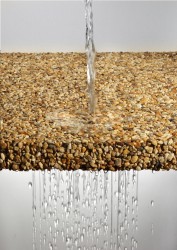
Resin bound paving is permeable! SureSet Resin Systems certainly are! Permeable resin paving drainage is excellent, so installing a SureSet surface makes sense. That said, it’s good to add a drainage channel at the bottom of any sloped surface, which will lead excess runoff in heavy rain to an appropriate soakaway or storm drain.
Domestic drainage channels are usually used for most homes’ driveways, although some homeowners prefer B125 drainage channels, as they can hold a weight of up to 12.5 tonnes.
2. Keep Permeable Surfaces Clean
The tiny pores that form when sustainable resin surfaces are installed are what make these surfaces permeable. Rainwater simply drains through the paving surface and into the ground below, reducing puddles and, in extremely cold temperatures, ice.
However, those tiny pores can become blocked by dirt, grime, and debris over time, so be sure to keep the surface clean to ensure you always have good drainage. Thankfully, durable resin bound maintenance doesn’t require much effort. Sweep away leaves and other debris at least once a week (more often in autumn), and remove any moss or algae growth, should it occur. Give the area a good wash with a pressure hose once or twice a year.
3. Add a Gradient
If you live in a high rainfall area or the ground on which your home is built has a high water table that results in the ground becoming saturated in heavy rain relatively quickly, consider adding a slight gradient.
Choose a gradient of 1:80 from front to back, which will allow water to drain but will prevent pushchairs, wheelchairs, and bikes from rolling away from you. If you add a gradient, you’ll also need to add a resin drainage channel to direct the runoff to a soakaway or storm drain.
As you have read, solving drainage issues is relatively easy. Contact us to find out about resin bound paving solutions for your project or download our technical document for more in-depth permeability rates and tests.

Related Products

Natural Aggregate for permeable resin bound paving surfacing installed by SureSet Resin Systems for external works
SureSet Resin| Colour: | Brown, Cream, R... |
| Certifications: | BBA, CHAS, CPD,... |
| Guarantee: | 21 |
| Country of Origin: | UK |
| Application: | Access roads an... |
| Typical Building Sec...: | Commercial, Con... |
| UV Resistant: | 1 |
| Depth: | 12-40 |
Contact

Contact
Contact