Who Fits LST Radiators?
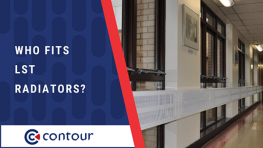
LST Radiators can be an invaluable safety asset to a school, hospital, or care home because they reduce the risk of scalds and burns - making environments safer for staff and service users.
Due to the nature of low surface temperature heating solutions, they must be properly installed by the right team. Contour has been blogging about who should fit your LST radiators and why proper installation is key.
Read on to find out more...
Project Types
LST radiators should be installed by plumbing and heating engineers.
On a traditional building project, M&E consultant engineers will have already specified the design and the size of the LST radiator for when it’s installed. This ensures that you always get the best heat output for your space.
This differs from design and builds projects. In these projects, it’s up to the contractor to design the system and size of the LST Radiator.
The Installation Process
When installing an LST radiator, the first thing that needs to be considered is the final position it will be on the walls.
In areas with limited spaces, it’s important to consider where the LST radiator will be placed, to help decide the placement of furniture and other services which may clash with the casing once it’s been installed.
Once the LST radiator has been hung on the wall, the flow and return water feeds can be connected.
The entry pipes to the LST radiator can depend on each location. However, the neatest solution is to have the pipes entering from behind it. This means you won’t have surface mounted pipework taking up valuable space in the room.
Once the heating system has been piped up, it can be filled with water and tested for leaks. Once this process is complete, the casing can be installed over the top.
Depending on the entry of the pipes and the flooring design, the casing may need to have cut-outs, so it can fit neatly over the top.
Once the radiator guard is installed to the manufacturer’s guidelines, it can be sealed up with a suitable mastic.
Depending on the environment and the client’s needs, the heating engineer can also install a range of thermostatic radiator valves (TRVs), these can be:
• Internal- inside the radiator cover. This is only recommended when the LST radiator is connected bottom opposite end (BBOE).
• Remote sensing- inside the LST radiator cover. This is used when the radiator has been connected top-bottom opposite end and the remote sensor can be installed at the bottom of the cover.
• External- outside the radiator cover which enables the client to turn the radiator temperature up and down without needing to gain access to the cover.
Some manufacturers offer a survey service, this means that any cut-outs for surface mounted pipework, skirting and other services can then be cut around in the manufacturing process.
So that the radiator guards can be installed at a later date when all of the first fix items of the project have been installed.
This will minimise damage because the radiator guards won’t be installed too early or be in storage for several months on site.
Conclusion
LST radiators need to be installed by qualified plumbing and heating engineers.
The type of building project will affect who specifies and designs the heating system. On traditional build projects, M&E consultant engineers will specify the design and size of the LST radiator whereas the contractor will design it and build projects.
You can arrange a survey service with us. A key part of our service is providing all site surveys free of charge to help you select the best radiator cover for your environment.
Would you like to find out more about LST radiators for your school, hospital, or care home?

Related Products

| Uniclass: | Pr_40 Signage, ... |
| Material: | 1.5mm Zintec Mi... |
| Application Method /...: | Internal |
| Corner Radius: | 10 |
| Height: | 450-1000 |
| Length: | 500-2000 |
Contact

Contact
Contact